Check out our new app!

Amazon Prime Big Deal Days is the October sale that’s really a dress rehearsal for Black Friday, and this year there’s a wrinkle nobody’s talking about: several of the things most likely to go “on sale” got more expensive two months ago. More on that below, because it changes what counts as a good price.
Here’s what’s actually known, what isn’t, and how to be ready without wasting a day refreshing deal pages.
When it is · The 2026 price trap · What’s actually worth buying · Spotting a real deal · October vs Black Friday · What to skip · What to do before it starts · FAQ
Amazon has confirmed the event is happening in October 2026 but hasn’t published the exact US dates yet. I’ll update this page the day they do.
What the pattern suggests: it has landed in the first half of October every year it’s run, and 2025’s ran October 7–8. It’s always 48 hours, always a Tuesday–Wednesday or similar mid-week pair, and always Prime members only.
A warning, because I nearly got caught by this myself. Search for the 2026 dates right now and you’ll find articles confidently stating “October 10–11.” Those are the 2023 dates — one of the top results is a TechRadar piece from September 2023 that search engines are surfacing as though it’s current news. The giveaway is the day of the week: those articles say “Tuesday, October 10,” and October 10, 2026 is a Saturday.
If a site gives you a date and the day of the week doesn’t match a calendar, it’s recycled. That trick catches out a lot of holiday shopping content this time of year.
Here’s the thing nobody points out: it has been a Tuesday and Wednesday three years running.
And Amazon’s own seller guidance from July says Prime Big Deal Days “returns at the same time as last year.” That’s not a date, but it’s a lot better than a rumour — it points at the first full week of October, starting on a Tuesday.
So plan for the first Tuesday and Wednesday of October and you’ll be close. I’m not printing it as fact until Amazon says so, and I’ll update this page the morning they do.
While I was researching this, search results confidently told me the dates were October 10–11. It looked current. Headlines everywhere.
The article saying so was from 2023.
Here’s the tell, and it’s a good one to keep: check the day of the week against a calendar. That piece said “Tuesday, October 10” — but October 10, 2026 is a Saturday. Wrong day, wrong year. Takes five seconds and it catches nearly every recycled deal post.
Worth knowing generally, because deal sites republish old articles with a fresh date at the top every single autumn.
This is the most useful thing on this page, so I’ve put it near the top. And I checked all of it myself on Amazon today rather than taking anyone’s word for it.
In August 2026, Amazon quietly raised the price of its own hardware. The cause was the memory-chip shortage driven by AI demand — Apple did the same to iPads back in June, and Fortune reported Amazon’s move on 21 August.
Here’s what that looks like on the actual product pages right now:
| Kindle | Price today | Before August |
|---|---|---|
| Kindle 16GB (base) | $149.99 | $109.99 |
| Kindle Paperwhite 16GB | $199.99 | $159.99 |
| Paperwhite Signature 32GB | $249.99 | — |
| Kindle Colorsoft Signature | $319.99 | — |
Here’s why that matters in October. A “$50 off” Kindle during Amazon Prime Big Deal Days might just put it back at the price it was in July. The percentage will look enormous, because it’s calculated against the new list price.
So write these two numbers on your hand: $110 for a base Kindle, $160 for a Paperwhite. That’s what they cost in the first half of this year. If October’s “deal” doesn’t beat those, it isn’t a deal — it’s a price correction with a sale badge on it.
This is where I’d have got it wrong if I hadn’t looked, and where I suspect a lot of posts will get it wrong: the increase didn’t hit the whole Amazon range evenly.
Fire TV Sticks, checked the same day, are not expensive at all:
Those are ordinary-to-good prices before the sale even starts, so a genuine October discount on a Fire TV Stick is likely to be a genuine discount. The warning above is a Kindle warning — I’d treat Echo and Fire tablets with the same suspicion until you’ve checked, but I’m not going to tell you they went up when I only confirmed Kindle with my own eyes.
Which is, honestly, the whole method: check the price yourself, now, and write it down. Everything else on this page is just detail around that one habit.
These are the most reliably discounted things in any Prime event, because Amazon controls the price and wants the devices in your house. Echo speakers, Fire TV sticks, Fire tablets and Kindles all typically see real cuts. Just measure against pre-August pricing.
One exception worth knowing: the Kindle Scribe was not part of August’s price rise. If you’ve been eyeing one, its discount this October is a genuine discount rather than a partial rollback.
The honest case for shopping in October is not that prices are lower than Black Friday — often they aren’t. It’s that you avoid December shipping stress and the “it’s sold out everywhere” problem on the toy everyone wants.
If it’s on your list regardless and the price is fair, buying it in October is a reasonable trade even if you leave a few dollars on the table.
Nappies, laundry detergent, coffee, toilet paper, vitamins your family already takes. There’s no risk of regret on something that gets used up, and Subscribe & Save discounts often stack with sale pricing.
This is the skill that makes the whole event worth showing up for, and it takes about thirty seconds per item.
Write down today’s price for the three or four things you actually want. Literally today, before any of this starts. A note on your phone is fine.
That number is your benchmark, and it’s the only one that means anything. When the sale hits and Amazon says 40% off, you’ll know in one glance whether 40% off is 40% off what you’d have paid last week, or 40% off a number nobody has ever paid.
Almost nobody does this, and it’s why people come out of these events feeling vaguely cheated without being able to say why.
That fourth one has saved me more money than the other three combined.
Lightning deals and “only 3 left at this price” exist to stop you doing any of the above. That’s their entire function.
If something you’d genuinely planned to buy shows up as a lightning deal, grab it. If it’s something you’d never thought about until the timer appeared, let it go. There will be another one in about four minutes.
Amazon Prime Big Deal Days and Black Friday are not the same sale twice. They discount different things, and knowing which is which is most of the game.
The rule of thumb: if it’s Amazon’s own product or something that sells out, October. If it’s something four retailers all sell and you can wait six weeks, November.
Anything where the buy box isn’t Amazon or the brand. Check who’s actually selling before you click. A tempting price is sometimes an open-box or resale listing, and the return experience is not the same.
Big-ticket electronics you don’t urgently need. TVs and laptops are historically better on Black Friday than in October. If you can wait six weeks, wait.
Anything with a suspiciously round “was” price. An item that’s “was $99.99, now $39.99” and has never sold at $99.99 is a list-price fiction. A quick price-history check settles it in seconds.
Lightning deals you feel rushed into. The countdown timer is the product. If you weren’t looking for it ten minutes ago, you don’t need it now.
Short answer: Amazon Prime Big Deal Days is Prime-only, so you need a membership to shop it at all. Longer answer is more interesting.
If you’re not a member and you’re only in it for October, a free trial covers the two days. That’s the honest advice, and yes, Amazon knows people do this — it’s why the trial exists. Set a reminder to cancel before it renews, or you’ve spent more than you saved.
If you’re already paying for it, this is one of two days a year where the membership does something beyond shipping, so use it.
If you’re on the fence about keeping it, here’s the test I’d use: add up what you actually saved across Prime Day in July and this October. If those two events together don’t cover the annual fee, the membership is being justified by shipping speed alone — which is a perfectly good reason, just be honest that that’s the reason.
Worth knowing: there’s a cheaper Prime rate if you receive EBT or Medicaid, and a student rate with its own longer trial. Neither gets mentioned much in deal coverage and both are real.
I keep running lists on my Amazon storefront through Q4 so I’m not starting from a blank page when the sale lands. These are the ones I’ll be checking against my benchmark prices:
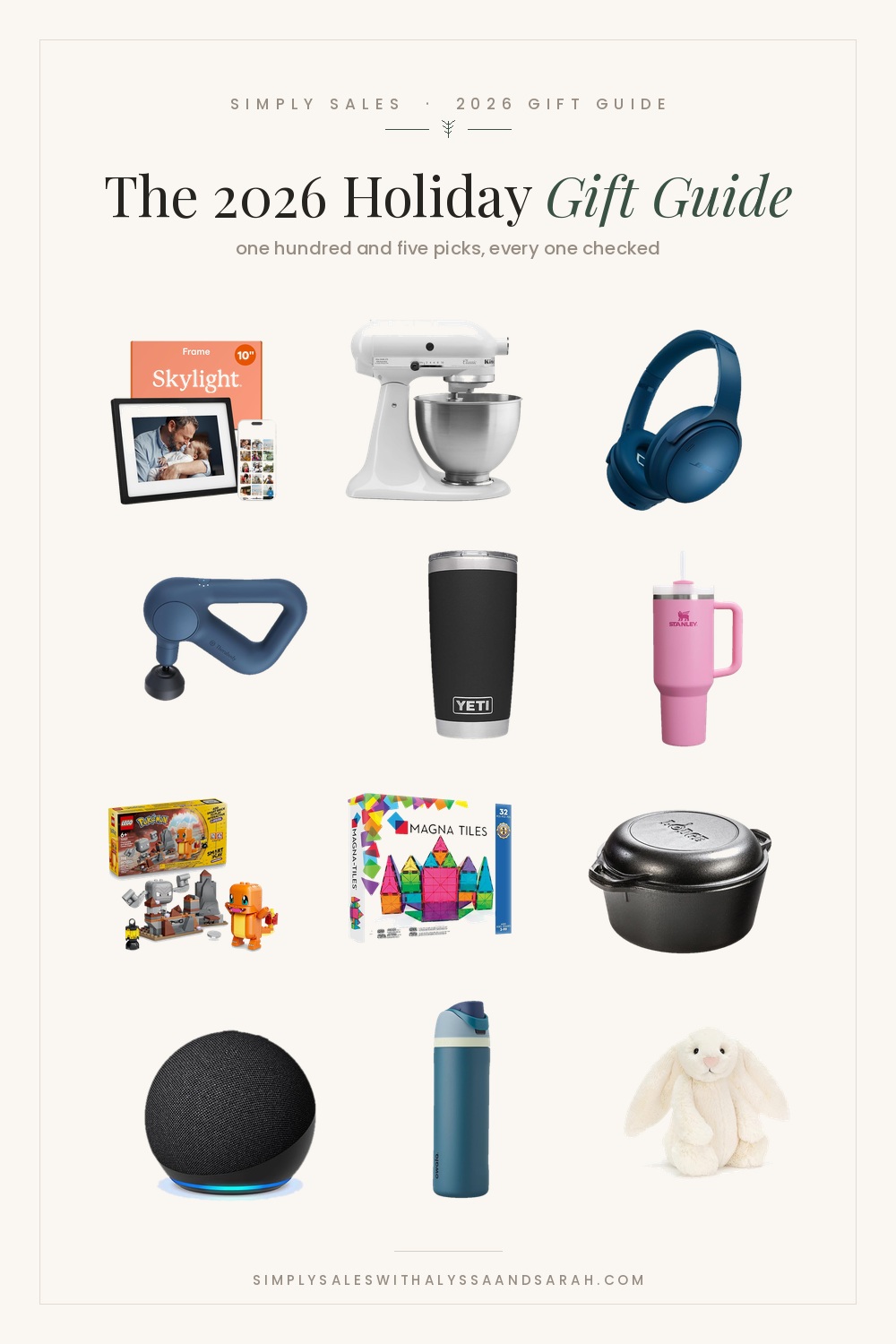
And the whole thing lives in our 2026 Holiday Gift Guide — 262 picks, every one checked by hand.
Amazon has confirmed October but hasn’t published the dates. The pattern is Tuesday and Wednesday of the first full week — it was Oct 10–11 in 2023, Oct 8–9 in 2024 and Oct 7–8 in 2025, all Tuesday-Wednesday. Plan around that and check back here; I’ll update the day it’s official.
Because they’re republishing an old article. Check the day of the week against a calendar — if a post says “Tuesday, October 10” and October 10 is a Saturday this year, you’re reading 2023.
Write down today’s price for the few things you actually want, before the sale starts. That’s your benchmark. Then check who’s in the buy box, whether the “was” price looks invented, and whether it’s the exact model you looked up.
No. Wait for Black Friday — it isn’t close, and in November you get Target, Walmart and Best Buy competing, which October doesn’t give you.
Normally yes — October is usually the deepest Amazon-device discount of the year. This year, read the price-trap section above first, because the starting point moved in August. Benchmark against the pre-August price, not the percentage on the page.
Yes for the deals themselves. A 30-day free trial works, and it also covers you through the sale and out the other side. Set a calendar reminder to cancel if you don’t want to keep it.
Usually not on price. For Kindles specifically, Black Friday has historically been the deeper discount — 2025 saw roughly 22–27% off and all-time lows, and 2024 was around 19–23%. October is about certainty and calm, not the rock-bottom number.
Whether Black Friday 2026 discounts from the new higher prices or the old ones is genuinely unknown, and anyone telling you a number right now is guessing.
Amazon uses these on the most in-demand items. You request an invite ahead of the sale and get notified if you’re selected. It costs nothing to request, so if there’s something specific you want, put your name in early.
Yes — in our Facebook group as we spot them, and on this page for the ones worth a proper look. The group moves faster.
Short version: write down today’s prices for the things you want, ignore the percentages in October, and remember that for anything Amazon makes, a chunk of this year’s “discount” is just undoing August’s increase.
I’ll update this page as soon as the dates are official. In the meantime, our 2026 Holiday Gift Guide has 262 hand-checked picks if you’d rather shop from a list than a sale page.
The real-time deals go in our Simply Sales Facebook group — 75,000 deal-hunters who’ll tell you fast when something’s actually good.
👉 And the free Simply Picks app tracks prices daily, which is the easiest way to know whether October’s price is genuinely the lowest. Grab it here.